Crossout Mobile - PvP Action
- 4.4
- Rating
- 10.00M
- Installs
- Free
- Price

 Analysis by App-foxy
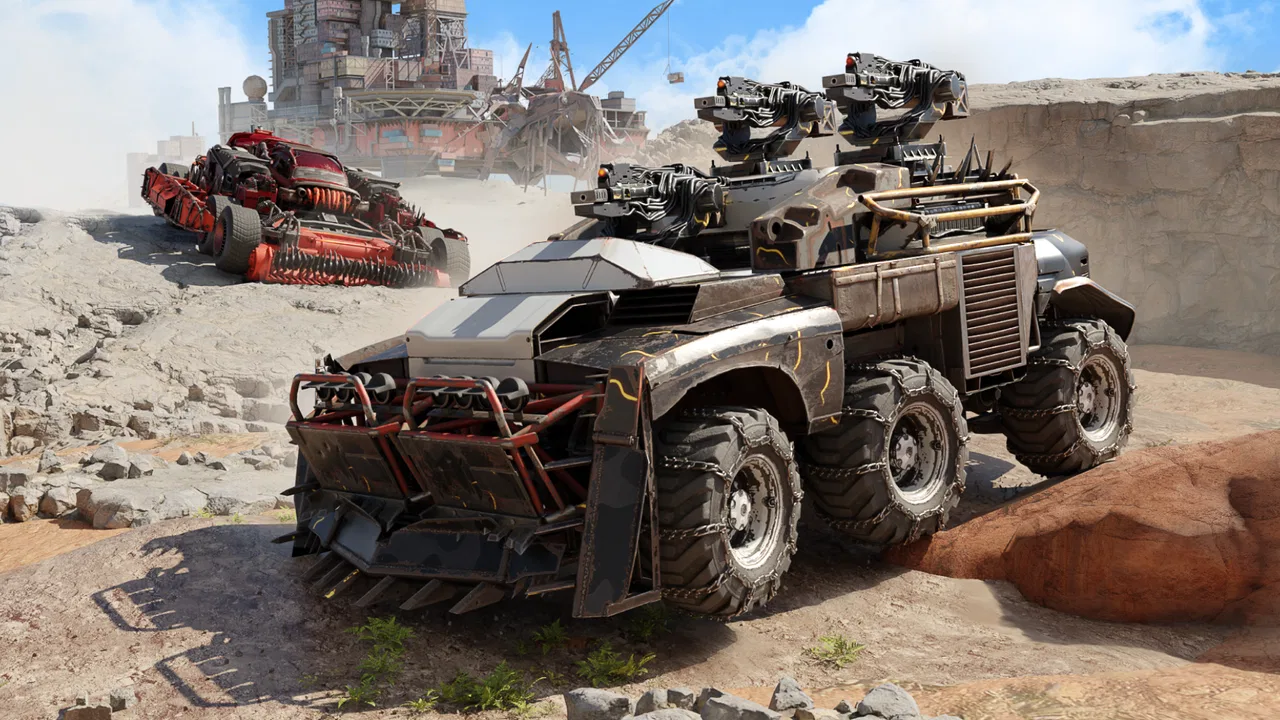
Crossout Mobile - PvP Action is the kind of action game that makes a strong first impression because it puts the vehicle itself at the center of every decision. Instead of handing me a finished tank and asking me to learn a fixed set of abilities, it lets me shape a battle machine and then test that machine against other players or computer-controlled opponents. I found that idea immediately appealing: every match feels connected to the choices I made before entering it.
That appeal comes with an important question, though. A game can be exciting during its first few sessions and still become tiring once the novelty wears off. After spending time with it, I see Crossout Mobile as a more demanding commitment than a quick arcade shooter, but also as a more interesting one for players who enjoy experimenting, adjusting their setup and learning from losses. It is free to play, developed by Gaijin Distribution KFT, and aimed at a Teen audience, so its vehicle combat is accessible without pretending to be a completely casual experience.
From first-week excitement to a lasting routine
I find the shift from first-week novelty to a lasting routine depends less on playing every day and more on keeping a reason to return: a vehicle role to refine, a weakness to investigate, or a fresh approach to test. That makes it easier to tell whether the game still fits my evenings or has started to feel like homework. The next section looks at how to make that routine sustainable.
You May Also Like

 Blood Strike: 2.5 Anniversary
Blood Strike’s Loadouts Turn Every Drop Into a Tactical Gamble
A close look at Blood Strike’s custom loadouts: how fast access to signature weapons reshapes its battle royale rhythm, rewards preparation, and narrows the gap between fights.

 Pandora - Music & Podcasts
Pandora’s Music Is Easy to Start, but Harder to Recover
Pandora’s strength is its low-effort path from a seed to a station. Its weak spot is how much confidence it asks you to place in connection, setup, and quiet recovery.

 8 Ball Pool
 Is Built on Rivalries, Rematches, and Routine
A close look at the rivalries, rematches, shared routines, and unanswered safety questions that turn a quick pool match into a persistent mobile community.

 Samsung Music
’s Quiet Strength Is Playing What You Already Own
Its reach comes less from spectacle than from dependable access to a personal library. That simplicity is both the app’s strongest retention engine and its ceiling.

 AccuWeather: Weather Radar
AccuWeather Review: A Quick, Clear Forecast for Everyday Decisions
For everyday plans, the best forecast is the one you can understand quickly. AccuWeather makes rain timing, radar, and local conditions easy to act on, with a few trade-offs.

 Hill Climb Racing
Why Hill Climb Racing Still Turns Crashes Into One More Run
A tiny car, a bumpy hill and one more upgrade: Hill Climb Racing keeps resurfacing because its simple chaos makes every near-miss feel personal.
More From Our News Desk



Why the opening hours work so well
The first-week appeal comes from the simple pleasure of building something that feels like my own. Even when two vehicles serve a similar purpose, the way they are assembled can change how I approach a fight. I might prefer a tougher front end and a direct assault, or I might feel more comfortable keeping distance and looking for openings. That personal connection gives each match more meaning than choosing a character from a fixed roster.
The action is easy to understand at a glance. Vehicles move, weapons create immediate feedback, and the battlefield encourages me to think about positioning rather than simply holding down an attack button. I quickly learned that charging forward is not always the fastest route to a useful contribution. A vehicle that survives longer can often do more than one that deals impressive damage for a few seconds and then disappears.
There is also a satisfying loop between combat and adjustment. After a poor match, I can ask a practical question: was the problem my aim, my route through the map, the vehicle’s durability, or the way its equipment worked together? That makes defeat feel informative, at least when I take the time to examine it. The game rewards curiosity during the first week because small changes can make a familiar battle feel different.
For someone who normally plays mobile shooters, the biggest change is that the vehicle is not just a skin around a weapon. It is the whole strategy. Movement, protection, firepower and the shape of the machine influence one another. This is why the game feels closer to a construction-and-combat experiment than to a standard run-and-gun title.
The first practical lessons
My most useful early habit was to stop changing everything at once. If I replaced several parts after every defeat, I could not tell which decision helped. Changing one meaningful element at a time made the results easier to read. That approach is especially valuable in a game where a vehicle can look powerful on paper but behave awkwardly once the battle begins.
I also found it important to judge a build by its role rather than by one impressive quality. A heavily armed machine may look attractive, but if it turns too slowly or exposes its vulnerable areas, its theoretical strength may not matter. Likewise, a mobile setup can create opportunities but become unforgiving when I make a positioning mistake. The best early upgrade is often the one that makes the vehicle easier to control, not the one with the flashiest description.
Players wondering whether the game is suitable for short sessions should know that it can fit into a brief break, but it does not always feel mentally light. Even a short sequence of matches can involve planning, reaction and post-match decisions. I would recommend it for someone who enjoys focused sessions, not for a person looking for a completely passive way to fill a few minutes.
What makes it different from ordinary mobile action games
The usual alternative in mobile action gaming is a character-based shooter with familiar movement, a fixed loadout and a clear ability cycle. Crossout Mobile takes a less predictable route. Its identity comes from combining vehicle handling with construction choices, so the player’s preparation matters nearly as much as moment-to-moment aim.
That difference is a genuine strength for players who like tinkering. It is less attractive if you want instant balance between every available option. A conventional shooter can be easier to understand because the developers control the character’s complete kit. Here, I have to accept that my own choices may create both strengths and weaknesses. The game is more personal, but it also asks more of me.
Who will enjoy the first week most
I think the strongest early audience is made up of players who like vehicle combat, customization and competitive matches with a clear learning curve. It also suits people who enjoy testing ideas rather than following one supposedly perfect setup. The combination of player-versus-player and player-versus-environment battles gives room to practice, experiment and then take a build into a more demanding contest.
On the other hand, I would not choose it for a child, since its content rating is Teen, or for someone who dislikes games where progress depends on repeated adjustment. It may also frustrate players who expect every loss to be explained by reflexes alone. Sometimes the real issue is the vehicle’s design or the decision made before the match even started.
Where the month-to-month value comes from
After the initial surprise fades, the game needs more than its construction concept to keep earning space on my phone. In my experience, its recurring value comes from the number of questions it creates. Can I make a more reliable close-range vehicle? Can I keep enough mobility while adding protection? Can a setup that failed in one type of encounter work better when I change my route and engagement distance?
Those questions give the game a useful form of replayability. I am not returning only to repeat the same match; I am returning to test a hypothesis. That is a stronger long-term reason to play than a simple reward animation, because it gives each session a purpose. Still, this value depends heavily on whether I enjoy the building process. If I only care about fast combat, the preparation may start to feel like an obstacle.
The presence of both PvP and PvE battles helps with routine. Competitive matches can expose weaknesses quickly, while battles against computer-controlled opponents offer a less stressful place to understand a new setup. I would use the latter as a testing ground rather than treating it as a complete substitute for competition. A vehicle that performs comfortably against predictable opposition may still struggle against a human player who notices its limitations.
One non-obvious advantage is that failure can be separated into two categories: execution and engineering. If I miss shots or take a poor route, I need to improve my play. If the vehicle cannot bring its weapons to bear or loses its useful equipment too easily, I need to rethink the build. Keeping those categories separate prevents me from endlessly rebuilding a machine when the real problem is my own decision-making.
How to build a sustainable playing habit
For long-term use, I recommend keeping a simple mental record of what each vehicle is meant to do. A build designed for aggressive pressure should not be judged by the same standards as one intended to survive and support a team. When I forgot that distinction, I often changed a promising vehicle because I was asking it to perform a role it was never designed to fill.
Another useful habit is to reserve time for controlled experimentation instead of making every session a serious competitive test. I can take one change into battle, observe how it affects movement and weapon use, and then decide whether it deserves further investment. This avoids the common trap of spending resources on a complete redesign before understanding what went wrong.
The game’s current version is 1.58.0.110117, and that matters mainly as a reminder that a live mobile game is something I return to rather than finish once. The experience is shaped by ongoing maintenance and updates, so a player who expects a fully static product may find the changing environment less comfortable than someone prepared to keep learning.
Where the maintenance burden appears
Crossout Mobile is not difficult to maintain in the same way as a productivity app, but it does ask for regular attention. New equipment choices, changing personal preferences and the need to keep a usable vehicle ready can turn the game into a small ongoing project. I enjoy that when I am in an experimental mood. When I only want a quick battle after a long day, the amount of thought around the match can feel heavier.
The free entry point is helpful because I can try the central experience without paying upfront. However, the game includes in-app purchases ranging from $0.99 to $99.99 per item. That range is worth considering before getting deeply invested. A player who is comfortable treating the game as a free experience can set a personal spending limit and focus on learning, while someone who dislikes purchase pressure should approach cautiously.
I would not describe spending as a replacement for understanding the game. A purchase cannot automatically solve poor positioning, weak target selection or an unsuitable vehicle role. The more useful question is whether I still enjoy the battles when I ignore the temptation to improve everything immediately. If the answer is no, spending more is unlikely to create lasting satisfaction.
Device compatibility is relatively broad because the minimum operating system is Android 7.0. That makes the game approachable for people who are not using the newest phone, although operating-system compatibility alone does not guarantee an equally comfortable experience on every device. Vehicle combat can become unpleasant if controls feel cramped or performance is inconsistent, so I would test the game before making any purchase.
Everyday scenario: the short evening session
Imagine I have twenty minutes after dinner and want something more involved than a puzzle but less demanding than a long console session. I can enter a few battles, identify one weakness and make a small adjustment before stopping. That is a good use case for the game because the session has a natural shape: play, observe, refine.
The same scenario can work against the game. If I lose several times in a row, I may keep playing because I want to correct the problem, turning a planned short break into a frustrating routine. The construction system makes losses feel personal, which is motivating when I am learning and irritating when I am tired. I recommend deciding in advance whether the session is for competition or experimentation; mixing those goals can make both feel worse.
What creates fatigue over time
The first source of fatigue is repetition without a clear personal objective. If I enter matches simply because the next reward is available, the battles can begin to blur together. The game is at its best when I have a reason to test a vehicle or improve a specific weakness. Without that reason, the preparation and combat loop loses some of its energy.
The second is the emotional cost of competitive play. A custom vehicle can make victory feel especially rewarding, but defeat can also feel like a judgment on my decisions. That is not a flaw for everyone; many players enjoy exactly this kind of accountability. Still, people who prefer relaxed action should spend more time with PvE battles or treat PvP results as information rather than as a score of personal ability.
A third issue is decision overload. The freedom to shape a machine is the game’s strongest feature, but freedom can become tiring when I am constantly comparing alternatives. I found it easier to stay engaged when I maintained one dependable setup and used another slot for experiments. That way, a failed idea did not remove my reliable way to play.
There is also a social and competitive fatigue that comes from feeling behind. Even without assuming anything about another player’s spending or experience, a well-practiced opponent can make my own vehicle feel inadequate. The healthiest response is to identify one controllable improvement rather than rebuild everything in frustration. If that process sounds unpleasant, a more straightforward action game may be a better fit.
How it compares with the usual alternatives
Compared with a traditional mobile tank game, this title gives me more ownership over the machine and more responsibility for its weaknesses. Compared with a character shooter, it is slower to understand but richer in preparation. Compared with a pure building game, it demands much more from combat awareness and does not let construction alone carry the experience.
Those comparisons clarify who should choose it. I would pick Crossout Mobile over a conventional shooter when I want my pre-match decisions to matter. I would choose a simpler arcade game when I want immediate action with minimal setup. I would choose a calmer building game when I want creativity without the pressure of PvP. Its middle ground is distinctive, but it is not automatically better for every mood.
Does the game earn a permanent place?
The audience is substantial: the game has passed 10 million installs, with an average rating of 4.4 from around 276 thousand ratings and roughly 4.5 thousand written reviews. Those figures suggest that the concept has reached well beyond a tiny niche, but popularity does not remove the need to match the game to the right player. I would read the broad interest as encouragement to try it, not as a guarantee that its maintenance-heavy loop will suit everyone.
For me, the lasting value depends on whether I continue to enjoy solving vehicle problems. If I like examining why a build failed, changing one element and returning to battle, the game can remain rewarding after the opening excitement. Its PvP and PvE options support different moods, while the personal nature of vehicle construction gives victories a satisfying sense of ownership.
If I want a game that can be opened, understood and enjoyed with almost no preparation, I would skip it. The same applies if I dislike free-to-play games with optional purchases, or if competitive losses quickly ruin my evening. The price of entry is free, but the real cost is attention: I have to learn the vehicle, accept imperfect experiments and decide how much time and money I am willing to give the loop.
My final recommendation is therefore measured but positive. Crossout Mobile earns lasting space when I treat it as a vehicle-building hobby with action attached, not merely as another mobile shooter. It has enough variety in its decision-making to outlive the first-week novelty, yet its complexity and recurring maintenance can become tiring without a clear personal goal. I would recommend it to patient action fans who enjoy tuning their own machines, and I would point casual players toward a simpler alternative when they want quick combat without the workshop thinking that makes this game distinctive.
FAQs for Crossout Mobile - PvP Action
01What is Crossout Mobile – PvP Action?
Crossout Mobile is a free-to-play vehicular combat game focused on fast PvP battles. You build an armored vehicle from different cabins, weapons, wheels, tracks, and decorative parts, then take it into online matches. Its main appeal is the freedom to create unusual combat machines and adjust them to different play styles, from close-range attackers to long-distance support vehicles.
02Can I play Crossout Mobile offline?
No. Crossout Mobile is primarily an online game and requires a stable internet connection for matchmaking, battles, account synchronization, and progression. Offline play is not the main focus, so it is best enjoyed over reliable Wi-Fi or a strong mobile data connection. Connection quality can directly affect matchmaking, loading times, and responsiveness during combat.
03Is Crossout Mobile free to download and play?
Crossout Mobile can generally be downloaded and played for free, but it includes optional in-app purchases. Players can progress by completing battles, earning rewards, unlocking parts, and improving their vehicles, while paid items may speed up progression or provide additional customization options. Before downloading, parents and users should review device purchase settings to avoid accidental spending.
04What kind of devices are compatible with Crossout Mobile?
Compatibility depends on your Android or iOS device, operating-system version, available storage, and hardware performance. Because the game features detailed vehicles, explosions, online battles, and changing environments, older phones may experience lower frame rates, longer loading times, or reduced visual quality. Check the current requirements on the official store page before installing the game.
05Does Crossout Mobile support multiplayer and competitive battles?
Yes. Multiplayer PvP is the central feature of Crossout Mobile. You join online battles with other players, cooperate with teammates, destroy opposing vehicles, and work toward victory objectives. Success depends not only on aiming but also on vehicle design, weapon placement, movement, positioning, and teamwork. Players should expect a competitive experience rather than a traditional offline campaign.
Pros
- Fast-paced PvP battles designed for short mobile sessions.
- Deep vehicle customization with weapons
- armor
- and cabin choices.
- Destructible parts make combat feel tactical and rewarding.
- Wide variety of vehicles and playstyles to experiment with.
- Regular events and updates help keep the multiplayer experience active.
Cons
- Progression can feel slow without spending money or playing frequently.
- Matchmaking may place newer players against more experienced builders.
- Touch controls can feel awkward during intense vehicle combat.
- Battles and updates may consume significant storage and mobile data.
- Some matches can feel unbalanced when powerful builds dominate.

Crossout Mobile - PvP Action
Gallery